Biomass from intermediate and cover crops for biomethane production — how does this affect the soil?
The usage of intermediate and cover crops for biomethane production emphasizes an innovative approach, which requires a thorough analysis of feasible opportunities and prerequisites for successful implementation within Ukraine’s context.
For the SAF platform, we have prepared a review of one of the sections of Analytical Note No. 1: Advanced biomethane production from intermediate and cover crops, which examines the impact on soil resulting from the use of such biomass for the production of biomethane.
Benefits for the soil
One of the most important aspects of the sustainability of biomass as a feedstock for biofuels is the absence of competition with food and feed production.
In the case of the use of intermediate and cover crops for energy, an important question is also to what extent these crops change their traditional agronomic functions such as soil protection from erosion, improvement of soil quality etc.
Results of theoretical studies by European experts (2022) indicate that the use of cover crops for biogas production with subsequent application of digestate to the field has a positive effect on carbon accumulation in the soil and reduction of CO2 emissions from the soil.
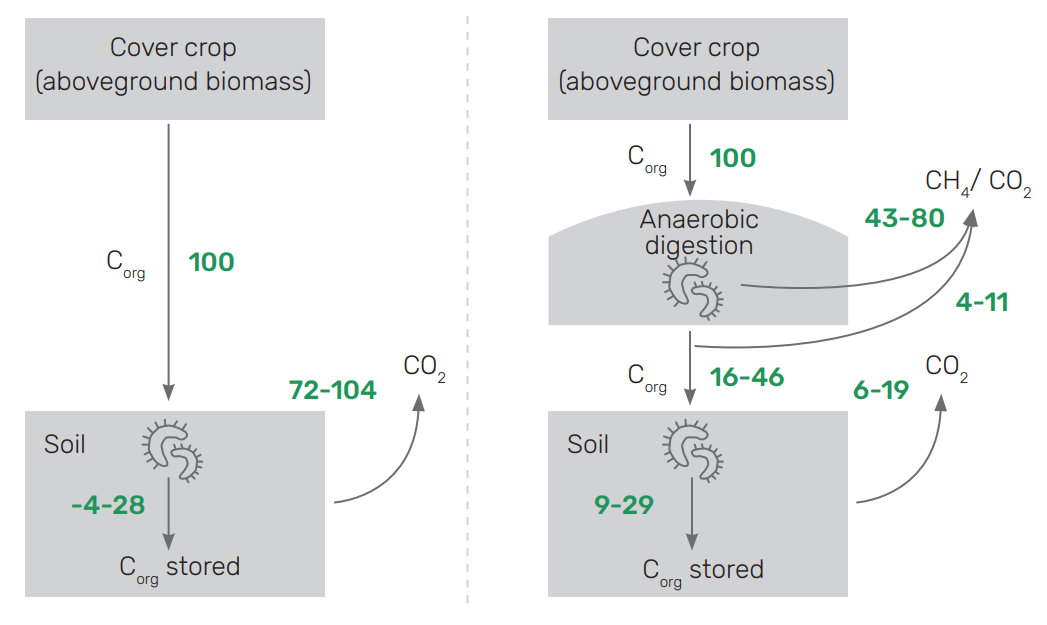
If we assume the organic carbon content (Сorg) in the aboveground part of a cover crop at 100 units, then its balance when incorporating biomass into the soil is -4 to 28. In the case of anaerobic fermentation of the aboveground biomass of a cover crop with the return of digestate to the field, the organic carbon balance is positive at the level of 9-29.
At that, the cover crop continues performing its traditional ecological functions (protection of soil from erosion, etc.), and the risk of negative impacts is low.
Read the full material with more detailed information on Austrian and French research into this topic on the SAF platform.
We remind you that UABIO is a partner of the Sustainable agribusiness platform (SAF).
SAF is a communication platform that brings together agribusiness stakeholders and aims to establish strong links between market players and introduce sustainable approaches in agriculture. For this platform, our team prepares verified professional content on the bioenergy sector.рми наша команда готує перевірену фахову інформацію щодо сектору біоенергетики.