Ukrainian biofuels to reduce greenhouse gas emissions in maritime transport
Biomethane is the most promising domestic fuel for production and use in the maritime sector!
For the SAF platform, our expert Semen Drahniev prepared a review of the report by the We Build Ukraine Analytical Centre, ‘Strategic Roadmap for Green Biofuels in Ukraine: Market Development and Harmonisation with the EU with a Focus on the Maritime Sector’.
UABIO experts were actively involved in the preparation and discussion of this analytical note, which is based on Denmark’s experience.
Key point: Using biofuels, including liquefied biomethane (Bio-LNG), is the most flexible and cost-effective way to cut emissions in maritime transport. Ukraine has a lot of potential to become a top supplier of these green fuels.
The use of fuels in shipping
In 2023, global shipping consumed approximately 300 million tonnes of heavy fuel oil (HFO) equivalent.
Very low sulphur fuel oil (VLSFO), approximately 150 million tonnes, is consumed mainly in the sector. In addition, ships consume 56 million tonnes of marine diesel oil (MDO) and over 50 million tonnes of heavy fuel oil (HFO). LNG consumption reached 18 million tonnes in HFO equivalent, and methanol consumption reached 160,000 tonnes.
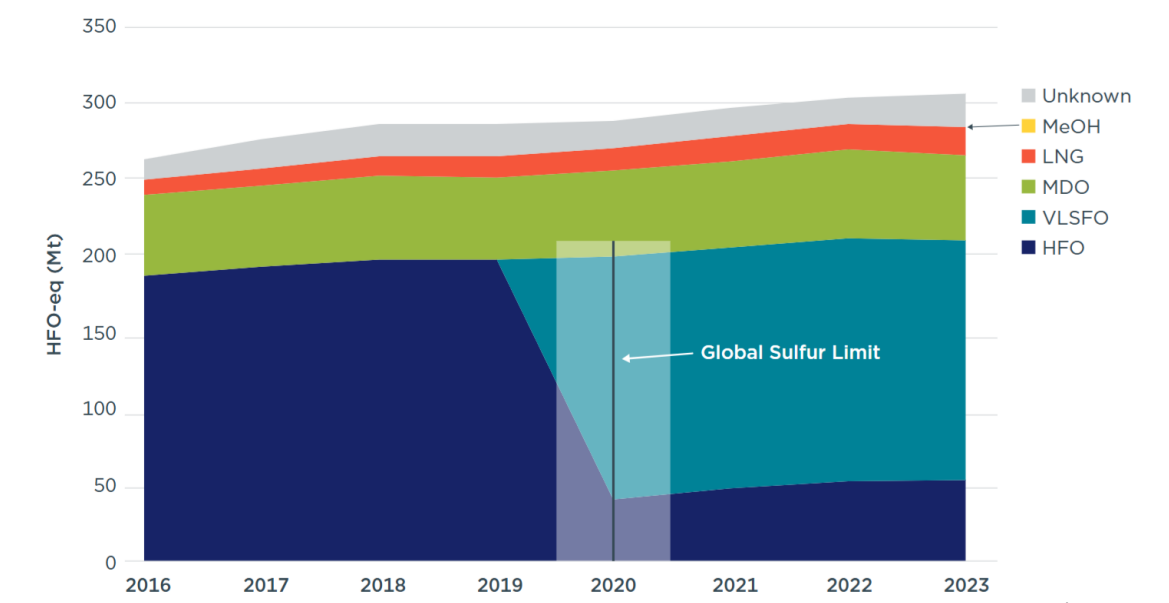
At the same time, biofuel consumption by ships amounted to approximately 0.7 million tonnes of oil equivalent in 2023. Bio-LNG supplies for shipping will amount to approximately 0.1 million tonnes of oil equivalent. Biofuel consumption is growing, and biodiesel bunkering is possible at more than 670 facilities, while Bio-LNG is possible at 106 facilities.
Prerequisites for biofuel production in Ukraine and its use in the maritime sector
Ukraine has significant biomass potential (approximately 26 million tonnes of dry matter per year in 2021) and other important prerequisites for the successful development of bioenergy. The total annual potential for biomethane production in the agri-industrial sector from waste, by-products and specially grown energy crops is 7.65 million tonnes of fuel equivalent.
Taking into account the impact of military actions and trends in agricultural production in Ukraine, the economic potential of biomass for producing biofuels for water transport can be estimated at an average of 2.9-3.0 million tonnes of fuel equivalent per year.
Read the full material with more detailed information about the regulatory framework for decarbonisation of the maritime sector and the role of biofuels/biomethane on the SAF platform. You can also download the full text of the analytical note there.
We remind you that UABIO is a partner of the Sustainable agribusiness platform (SAF).
SAF is a communication platform that brings together agribusiness stakeholders and aims to establish strong links between market players and introduce sustainable approaches in agriculture. For this platform, our team prepares verified professional content on the bioenergy sector.