Ukrainian biomethane for European buyers — summary of a joint webinar by agriportance and UABIO
On 15 January, a webinar was held, organised by the German company agriportance GmbH, a member of the Association, in collaboration with UABIO. The event focused onhow Ukrainian producers can position themselves meaningfully in the European biomethane market — from production outlook to trading realities.
Georgii Geletukha, Chairman of the Board of UABIO, spoke at the webinar. In his presentation, he highlighted the state of biomethane production in Ukraine and its future prospects.

Main topics
- The current state of biomethane, bio-LNG and biogas production in Ukraine — and what’s coming next.
- Market access options and sales routes into the EU: structures, requirements & key success factors.
- How European pricing works & what drives demand in voluntary vs. compliance markets.
- Regulatory developments shaping trade opportunities (and risks) for producers and traders.
Reports of the participants
“Development and prospects of biomethane production in Ukraine” | Georgii Geletukha, Head of the Board of Bioenergy Association of Ukraine
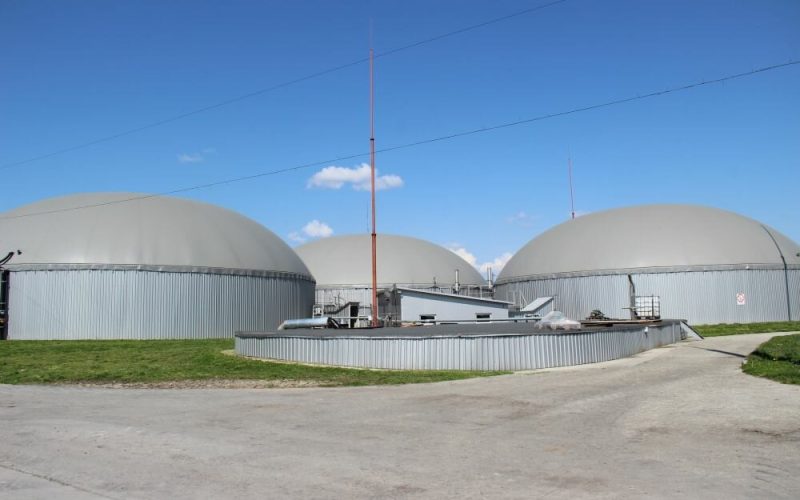
“There are currently five biomethane plants operating in Ukraine with a total capacity of 52 million cubic metres of biomethane per year. In 2025, the total production of all five plants amounted to over 11 million cubic metres of pipeline biomethane and about 5,900 tonnes of Bio-LNG. In 2026, we expect two biomethane plants with a total capacity of 59 million cubic metres of biomethane per year to be launched. Six biomethane plants with a total capacity of over 36.8 million cubic metres of biomethane per year are also scheduled to be launched in 2027 and 2028,” said Georgiі Geletukha.
During speech, the head of the UABIO board also highlighted the advantages of biomethane production in Ukraine and spoke about its total potential — approximately 21.8 billion cubic metres of biomethane per year. The main potential is concentrated in the production of biomethane from agricultural crop residues (5.2 billion cubic metres per year) and biomethane from cover and intermediate crops (9.8 billion cubic metres per year).
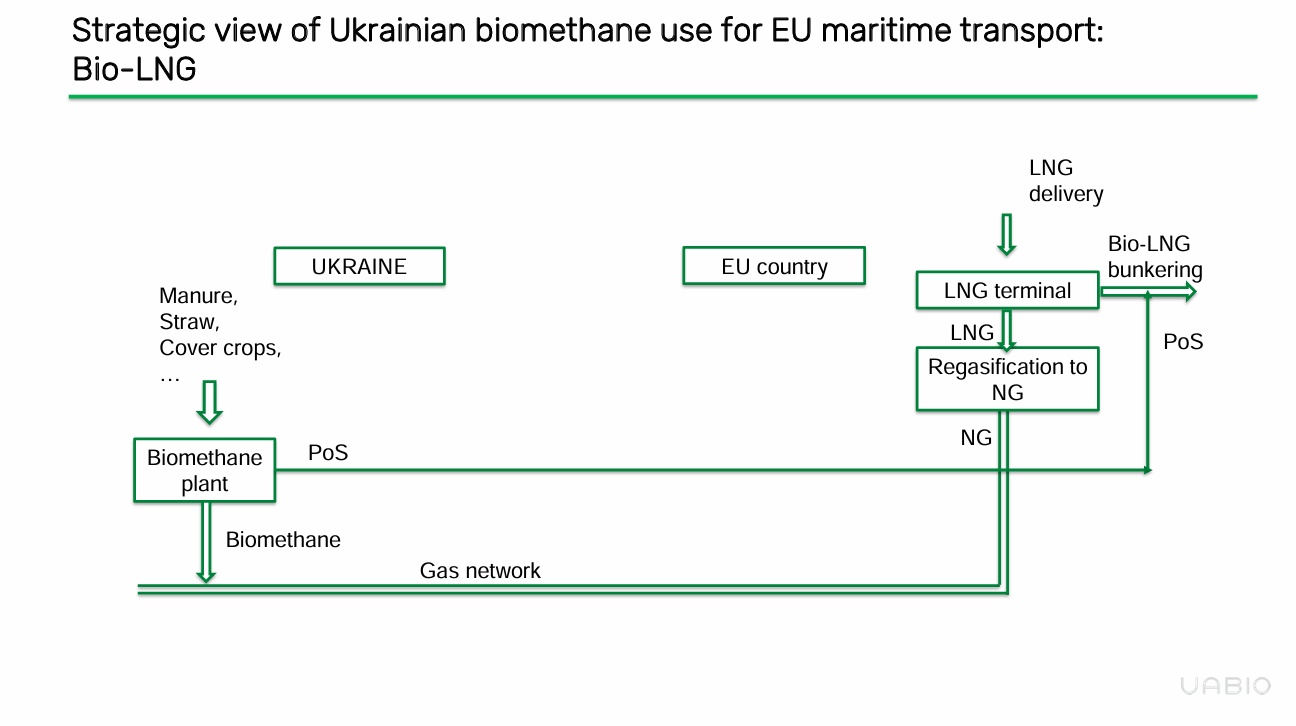
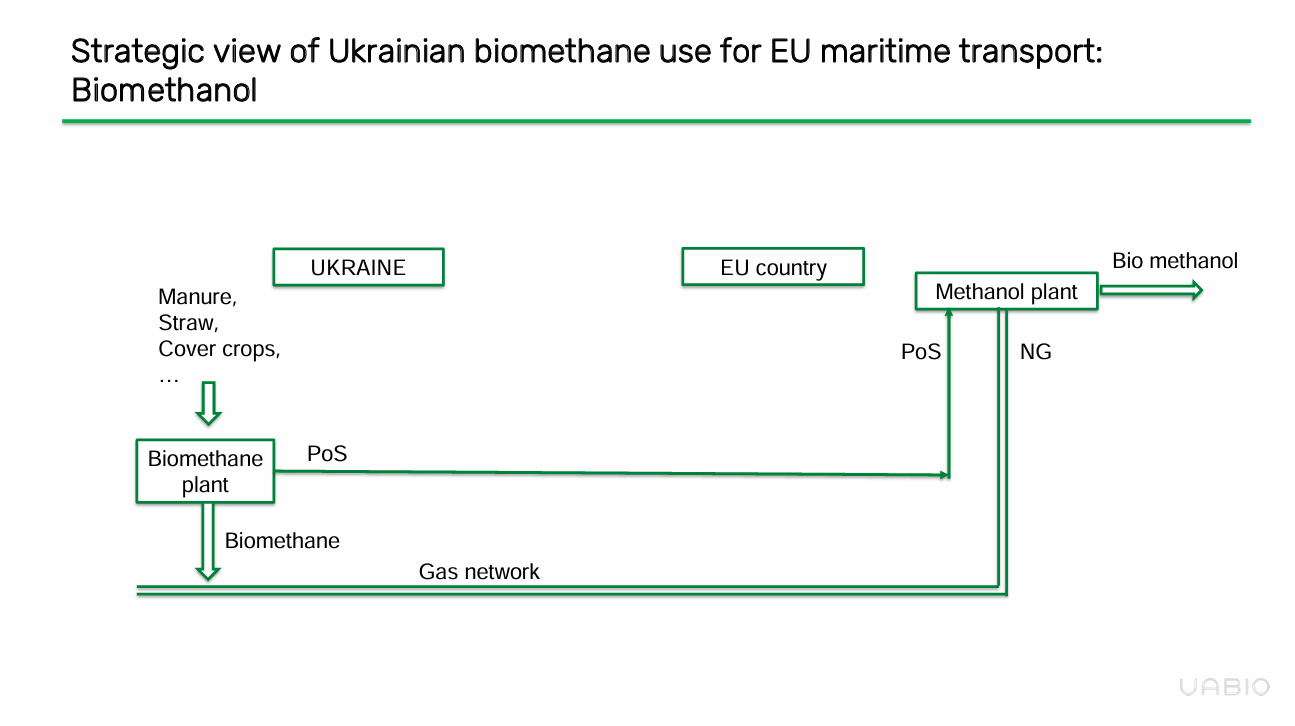
Georgii Geletukha shared insights on the use of biomethane for decarbonising maritime transport. In particular, he discussed the advantages and disadvantages of using biomethane in maritime transport. He also shared his strategic vision for the use of Ukrainian biomethane in EU maritime transport, specifically Bio-LNG and biomethanol.
Download Georgiі Geletukha’s presentation (in English)
“Market Developments and Trading Perspectives” | Henning Dicks, Managing Director and Head of Business Development agriportance GmbH
Overview of biomethane trading in Europe
Opportunities (Growth levers in a dynamic European market):
- Policy-Driven Growth — RED III, national mandates (e.g. blend quotas, subsidies).
- Shift towards negative Cls — Growing demand in Germany, Netherlands etc.; increasing premiums for negative Cl biomethane.
- New Use Cases Emerging — Maritime sector, green hydrogen from biomethane etc.
Risks & Challenges (Challenges in a fragmented and shifting landscape):
- Regulatory Fragmentation — Country-specific rules and implementation timelines (e.g. differing RED III transpositions).
- Volatile Pricing & Demand — Spot price fluctuations, overcapacity risks, dependency on political frameworks.
- Transaction & Verification — Mass balance, GHG reporting, sustainability checks – high risk when not done properly.
Henning Dicks explained the difference between Guarantees of Origin (GO, proof that an amount of energy is created from a renewable source) and Proofs of sustainability (PoS, verify that biomethane meets sustainability criteria — for example, reduction of greenhouse gas emissions, use of sustainable raw materials, etc. — i.e. proof of sustainability across the entire value chain).
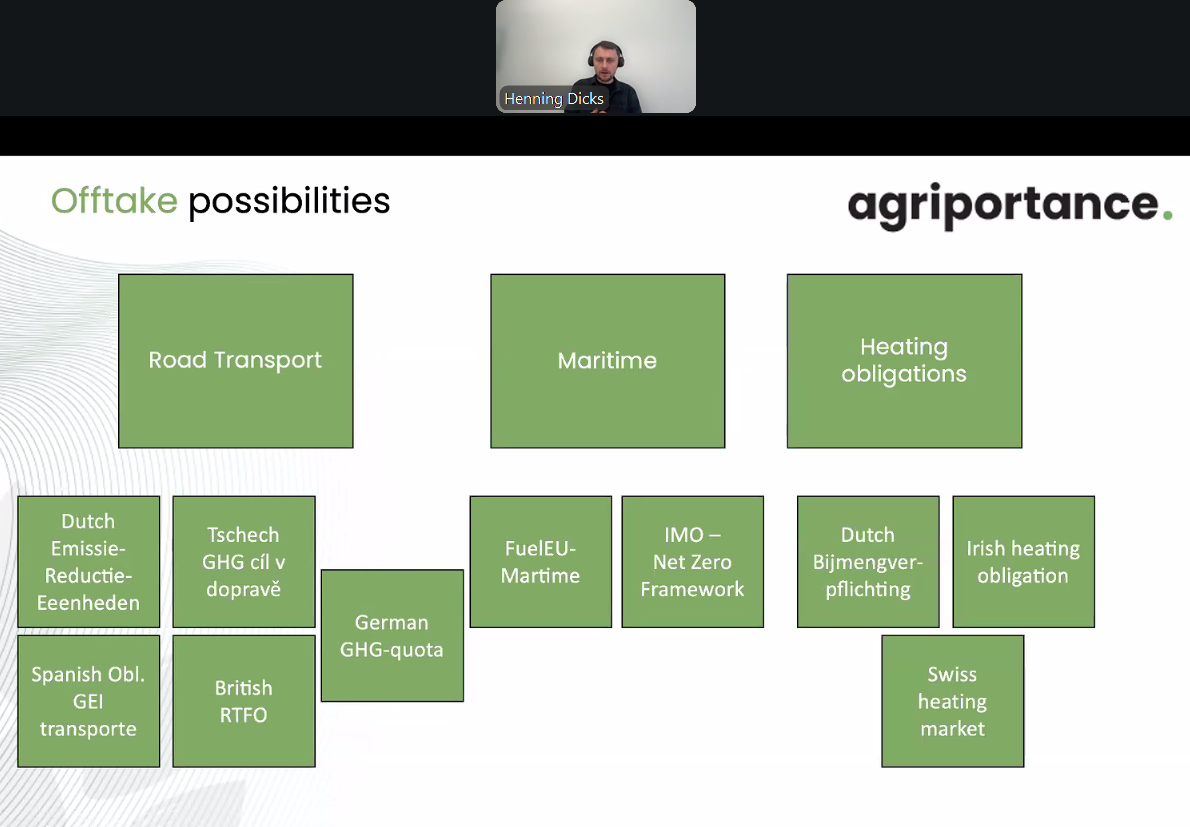
The expert also explained the difference between subsidised and non-subsidised biomethane and discussed the possibilities for selling biomethane in Europe.
We would like to express our sincere gratitude to agriportance GmbH for organising this important and useful webinar. We are confident that Germany’s experience will undoubtedly help Ukraine in developing its bioenergy sector and, in particular, biomethane exports.