Ukrainian Energy Between Crisis and Transformation: An Interview with Georgii Geletukha
Nowadays , Ukraine’s energy sector is currently going through one of the most difficult periods in its history. Massive attacks on infrastructure, shortages of heat and electricity, and at the same time the need to move toward European decarbonization standards — all of this is shaping a new reality for the industry. In these conditions, the issues of energy security and system resilience come to the forefront.
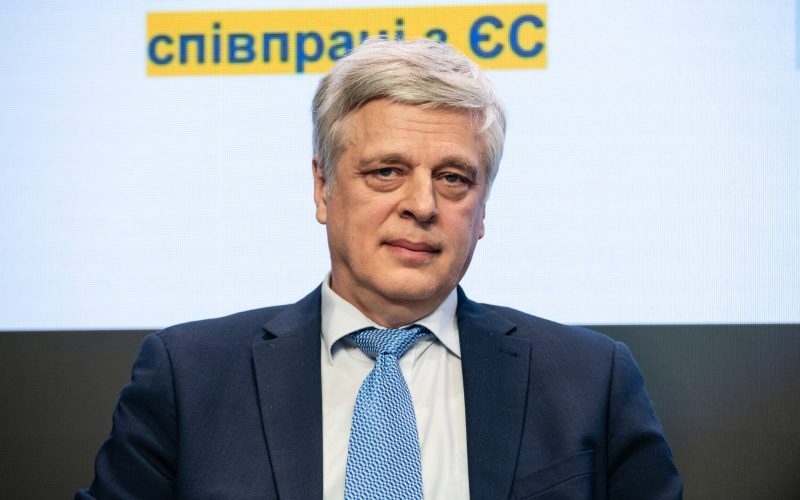
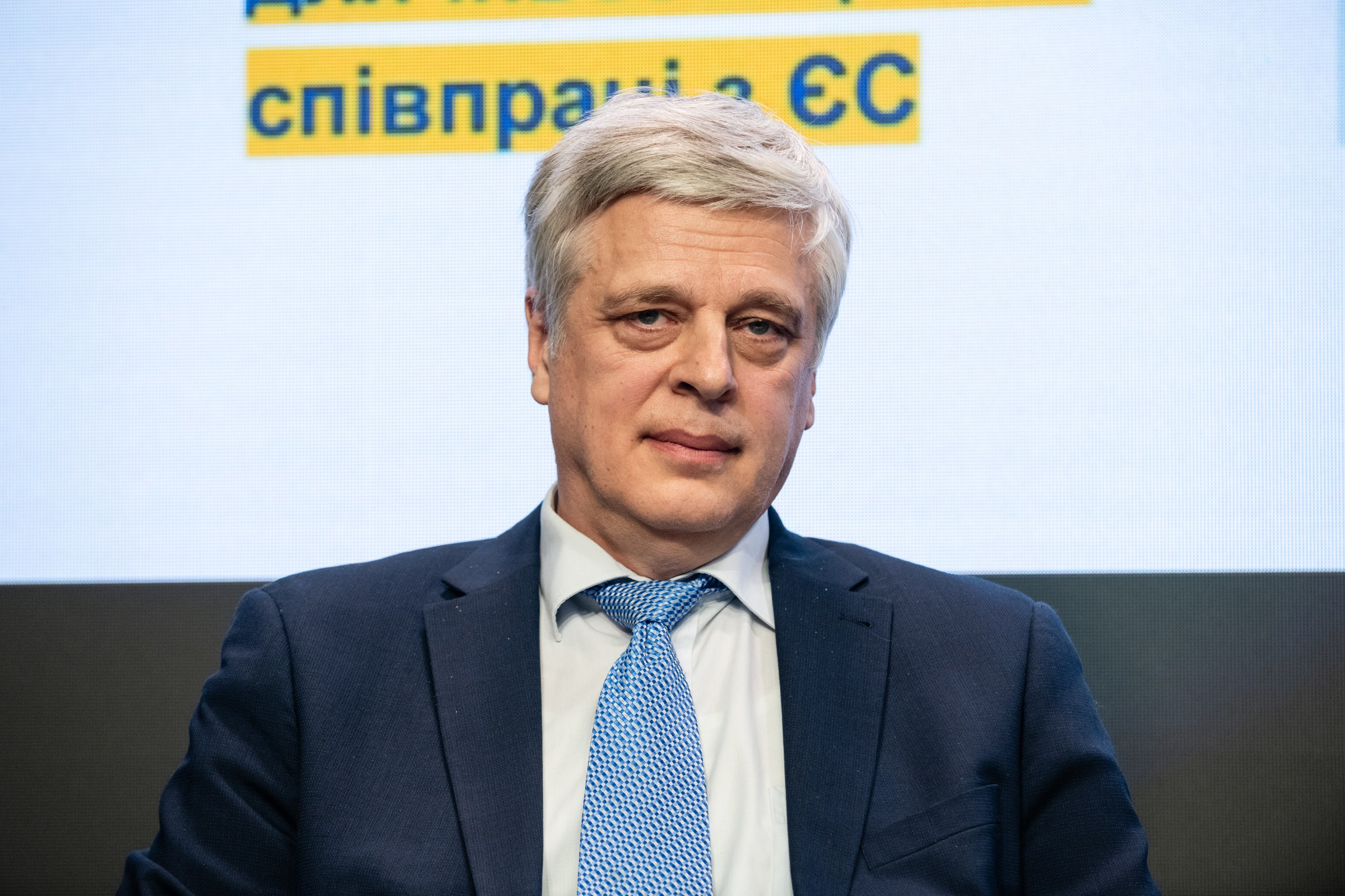
We spoke with Georgii Geletukha, Chairman of the Board of the Bioenergy Association of Ukraine, about the weaknesses of the centralized system, the potential of bioenergy, and key solutions for the future.
Centralized Systems: Challenges and Solutions
— Mr. Geletukha, to what extent has the current crisis exposed the weaknesses of the centralized model?
— The most illustrative example is the situation in Kyiv. This winter has been very difficult for the city, especially on the left bank. Historically, both heat and electricity there have largely depended on two large combined heat and power plants — CHP-4 and CHP-6. When these facilities were struck, the consequences were immediate: thousands of buildings were left without heating in subzero temperatures, and electricity supply in some areas was effectively reduced by half.
This clearly demonstrated a key vulnerability of the system. The centralized model is indeed efficient from an engineering perspective — it allows for maximum fuel utilization by producing heat and electricity simultaneously. But all this efficiency disappears the moment a single source is destroyed. Then it’s not just one facility that loses energy, but an entire district. This means that in wartime conditions, the centralized model is systemically vulnerable and cannot serve as the foundation of national energy security.
That is why it is now obviously: we need not just an efficient system, but a resilient one. And resilience means decentralization.
— Are there examples of a more resilient model within Kyiv itself?
— Yes, and they are quite revealing. If you compare the left and right banks, the difference becomes obvious. On the right bank, in addition to CHP-5, there are around 180 district boiler houses. When the main station was damaged, these boiler houses were able to take over the load, and the city effectively avoided a large-scale collapse of heat supply.
On the left bank, such a reserve does not exist — which is why the situation there is much more difficult. This clearly shows that having distributed generation sources is a key factor in system resilience. It’s a simple but important lesson: the system must have a safety margin. It must anticipate scenarios where one source goes offline.
— Does this mean the focus should be exclusively on renewable energy, particularly bioenergy?
No, and this is important to emphasize. At this stage, the question is not what fuel the system runs on. The question is its architecture. If tomorrow 180 boiler houses appear on the left bank — even if they run on gas — it would already radically change the situation.
Of course, in the long term we must move toward renewable energy, but in the short term the logic is different — ensuring reliability. The ideal model today is a combination of solutions: restoring large CHP plants that provide base load, while simultaneously creating a network of smaller facilities that can quickly take over in case of accident.
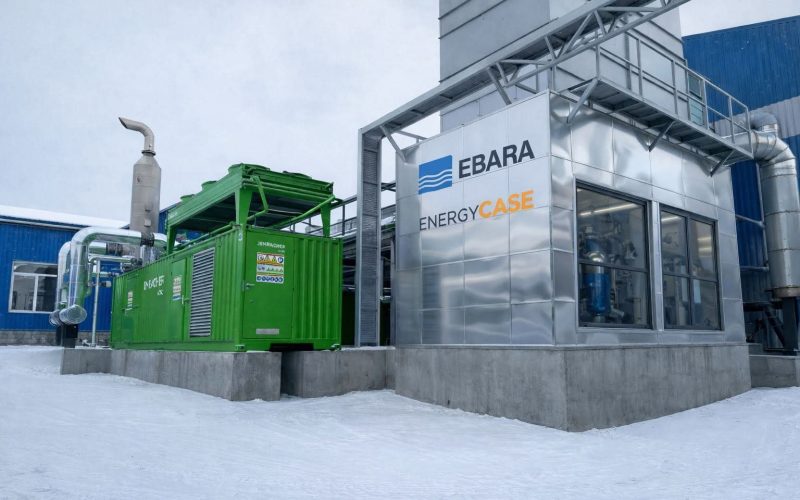
Cogeneration units play a special role here. These are compact, often containerized solutions capable of producing both heat and electricity. They can be installed quickly and can become the “reserve” we currently lack.
Ukrainian biomethane: production and export
— Ukraine has already started producing biomethane. How important is this resource?
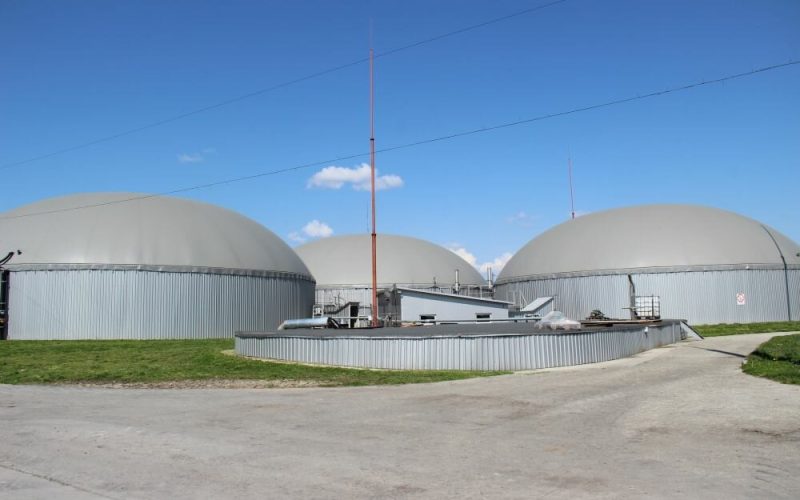
— For now, it’s still a small share of the energy balance. We currently produce just over 100 million cubic meters per year, while total gas consumption is about 20 billion. That’s roughly 0.5%.
But it’s important to understand the context: this is essentially the first year such projects have been launched. By 2030, under an optimistic scenario, we could reach around 200 million cubic meters. Before the full-scale invasion, we planned much more — about one billion — but investors are cautious now. The risk of infrastructure destruction during wartime cannot be ignored.
However, this slow development creates a delayed effect. Once the war ends, we will likely see rapid growth — a boom in biomethane projects.
— Why isn’t biomethane used domestically?
Because the economics currently works against it. Ukraine lacks fully developed market mechanisms for decarbonization.In the European Union, there are systems that incentivize decarbonization — emissions trading, CO₂ taxes, and so on.
As a result, it is more profitable to export biomethane to markets where buyers are willing to pay more. But this situation is not permanent. As Ukraine integrates into the EU, we will have to implement similar mechanisms, and the market will change.
Barriers to the development of bioenergy
— What is currently the biggest obstacle to bioenergy development?
— The biggest issue is distorted pricing policy. Gas for households is artificially cheap. In fact, we have three different prices for the same resource:
- households — ~8,000 UAH/1,000 m³.
- public institutions — ~16,500 UAH/1,000 m³.
- businesses — ~24,000 UAH/1,000 m³.
This creates completely different economic incentives.
Where gas is expensive — such as in industry — there is already a shift toward biomass. There, it makes economic sense. But for households, gas remains cheaper than alternatives, so there is no motivation to change.
— Why isn’t business investing in heat supply?
— Because there is no real market in the classical sense. In a normal economy, shortages lead to higher prices, which in turn stimulate investment. In Ukraine, shortages exist, but prices remain regulated and largely unchanged.
As a result, businesses do not enter this sector because they see no opportunity to recoup investments. The state is forced to handle the problem itself — through municipal enterprises that are already financially strained.
— What solution could change the situation?
— A transition to market pricing combined with targeted social support. The idea is simple: households pay what they can — say, up to 15% of their income — and the state compensates the rest.
This approach solves several problems at once. First, assistance becomes targeted rather than distributed universally. Second, it creates incentives to save energy, insulate buildings, and seek more efficient solutions. Third, it opens the door for investment, as prices begin to reflect the real cost of resources.
— How affordable are cogeneration units?
— Roughly speaking, about $1,000 per kilowatt of installed capacity. For example, a 2.5 MW unit costs around $2.5 million.
This is relatively inexpensive, especially compared to biomass CHP plants, which are much more capital-intensive. At the same time, such units can pay for themselves in 2–3 years, making them very attractive for businesses. That’s why we are currently seeing rapid growth in this segment.
Successful cases of using biomass
— Are there successful examples of biomass use?
— Yes, and they are quite illustrative. For example, oil extraction plants. Ukraine is one of the world’s leaders in sunflower oil production, and the process generates sunflower husk, which used to be considered waste.
In such conditions, projects pay for themselves very quickly and operate as efficiently as possible. Today, many such enterprises use it as fuel to produce both heat and electricity for their own needs. This creates a closed cycle where waste becomes a resource.
— Do approaches differ depending on the size of settlements?
— Yes, quite significantly. In large cities, the main limitation is logistics. You can’t easily transport large volumes of biomass into the city center. That’s why such solutions should be located on the outskirts, with heat then supplied into the system.
In smaller towns, the situation is much simpler. Fuel supply is easier to organize, infrastructure is less strained, and there is generally more flexibility.
Interestingly, European experience shows that even large cities can successfully run on biomass. For example, in Stockholm about 90% of heat is produced from biomass, and in Copenhagen around 85%. But this is the result of careful planning and proper infrastructure.
Prospects for the Postwar Development of Bioenergy
— How do you see the development of the energy sector in the coming years?
— The war is undoubtedly slowing development, but at the same time it clearly shows the direction we need to move in. We have already seen the risks of large centralized systems and understood the importance of redundancy and flexibility.
After the war ends, I am confident we will see a sharp increase in investment in decentralized and renewable energy. This will include biomass, biogas, and biomethane. In a sense, time is working in favor of these solutions. They just need to be implemented correctly.
Ukraine has a unique opportunity to build a new energy system—more resilient, decentralized, and integrated with the European market.