Global biogas and biomethane potential map: a new geospatial tool developed by the IEA
Today, there is a growing demand in energy policy for projects that enhance energy security, reduce emissions, and boost the local economy. Biogas (raw biogas and biomethane) is unique in that it addresses all three of these objectives at once.
The International Energy Agency (IEA) recently published a global spatial analysis assessing the potential for biogas production from current organic waste streams. The latest modeling shows that nearly 900 billion cubic meters of biogas (in natural gas equivalent) could be produced annually. This is enough to meet more than 20% of current global demand for natural gas. More than 70% of this sustainable potential is located in emerging and developing economies, led by India and Brazil, as well as China.
To help decision-makers and stakeholders assess opportunities for biogas and biomethane at the national and local level, the IEA has also launched a new interactive online map that allows users to explore these findings in greater detail.
Energy, waste management and sustainable development goals
The right approach to developing the biogas sector delivers a threefold benefit: it reduces emissions, improves waste management, and strengthens energy security. Biogas embodies the principles of the circular economy, creating new opportunities for rural communities and industry. For example, in the EU, the production of nearly 20 billion cubic meters of biogas and biomethane in 2025 resulted in savings of approximately $6 billion on fossil fuel imports.
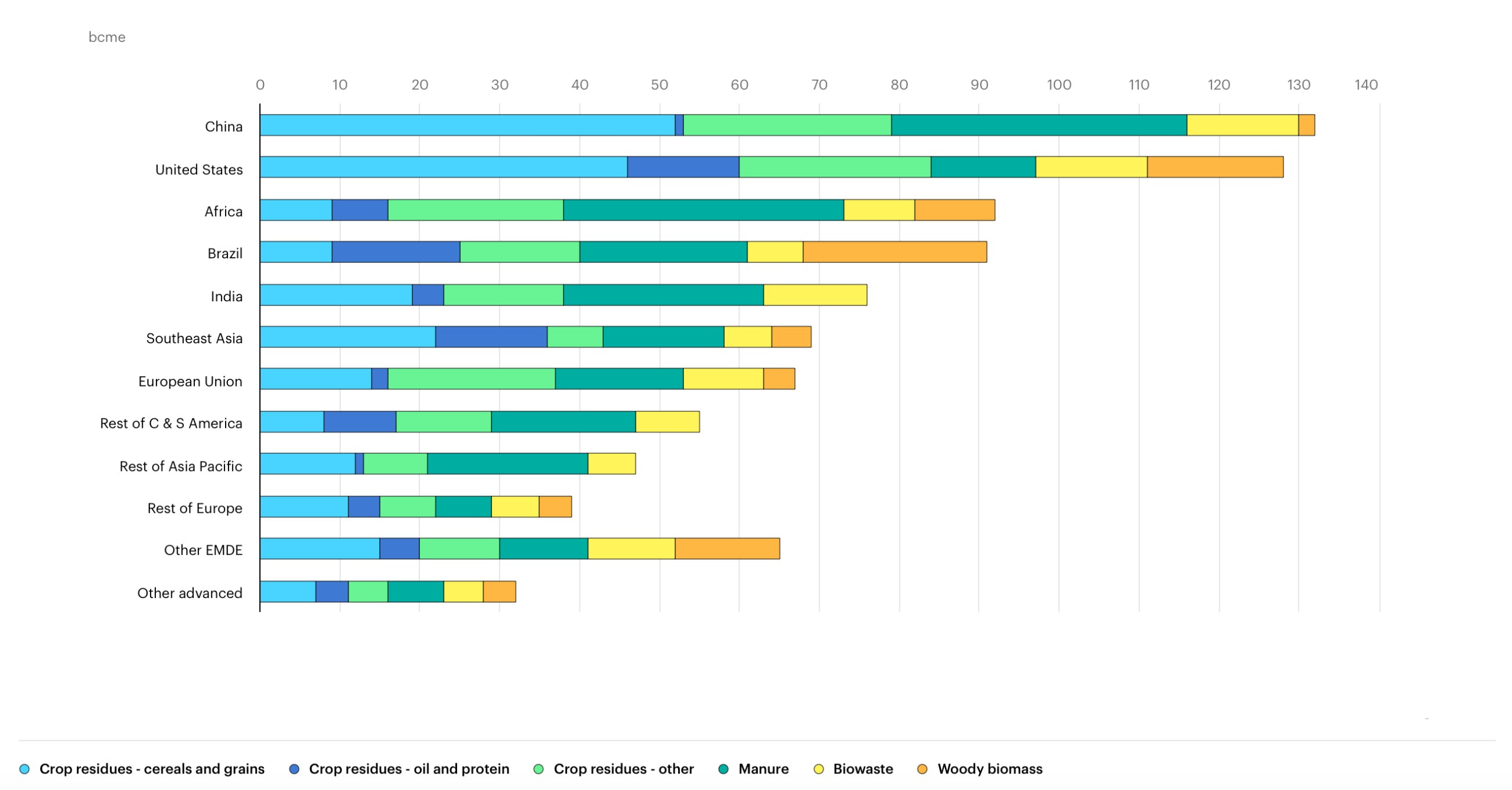
Global biogas production currently stands at 1.7 EJ. The goal is to increase this to nearly 6 EJ by 2035, in line with the COP30 commitments made in Belém. According to the IEA, this will result in a reduction of approximately 0.5 gigatons (Gt) of CO2-equivalent emissions per year through the processing of manure, bio-waste, and crop residues in methane digesters. This processing prevents methane formation in the agricultural sector and replaces traditional fuels, supporting the COP31 goals of halving the growth rate of waste generation by 2035 and reducing methane emissions.
At the same time, the industry faces high production costs, complex permitting procedures, logistical challenges, and a lack of government support. Furthermore, methane leaks along the supply chain can completely negate their environmental benefits. Therefore, accurate monitoring, transparent reporting, and reliable carbon accounting standards are critical to verifying the environmental sustainability of biogas projects.
Geospatial modeling: opportunities for biogas production
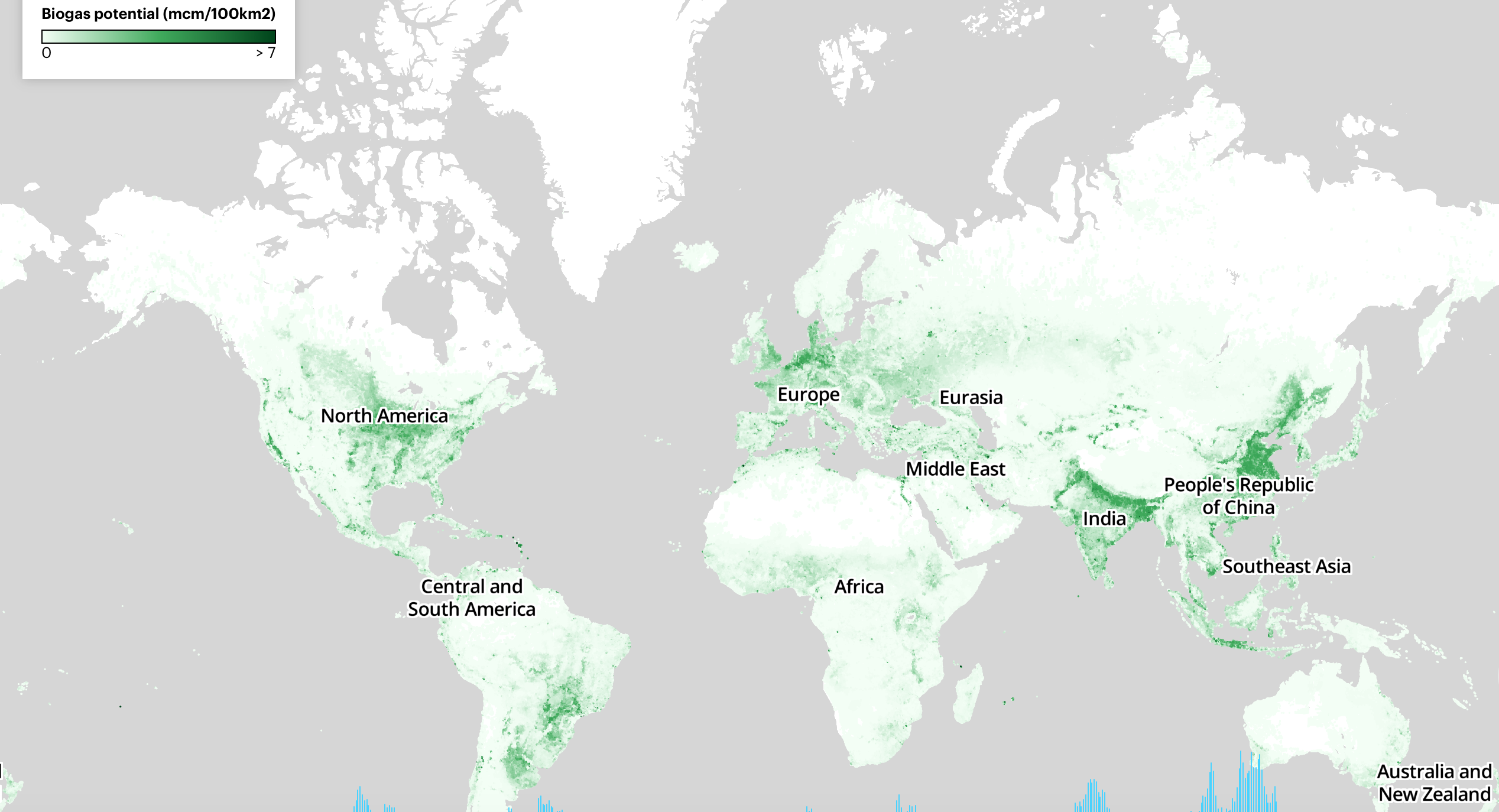
Overcoming industry-specific barriers and increasing production by 2035 will require supportive policies that take into account local conditions and the limited availability of organic raw materials. Therefore, government policy should focus on the most promising types of raw materials and their end-use options, based on a thorough assessment of local conditions.
To assess regional potential, the IEA has developed the Geospatial Model for Biogas Resource Assessment (BioGRAM). This tool has already been used to analyze markets in India, Southeast Asia, and Ukraine. BioGRAM generates supply cost curves for more than 40 types of feedstock (agricultural residues, manure, and biowaste) that do not compete with the food sector. Taking into account existing infrastructure — including gas pipelines and roads — the model identifies the most cost-effective locations for building biogas plants near feedstock sources.
Using an interactive online map, users can select specific areas, assess biogas potential by feedstock type, and calculate the costs of developing these resources, taking into account their proximity to utility networks.
View the IEA’s online map of global biogas and biomethane potential
As governments increasingly develop their own energy sources, the IEA aims to support policymakers with reliable data and analytics. For example, a new online tool provides governments, investors, and businesses with access to estimates of production potential and costs. By increasing data transparency, the BioGRAM model is designed to facilitate investment decisions, policy development, and the growth of biogas and biomethane value chains.