Marine biodiesel in Rotterdam becomes cheaper than conventional shipping fuel
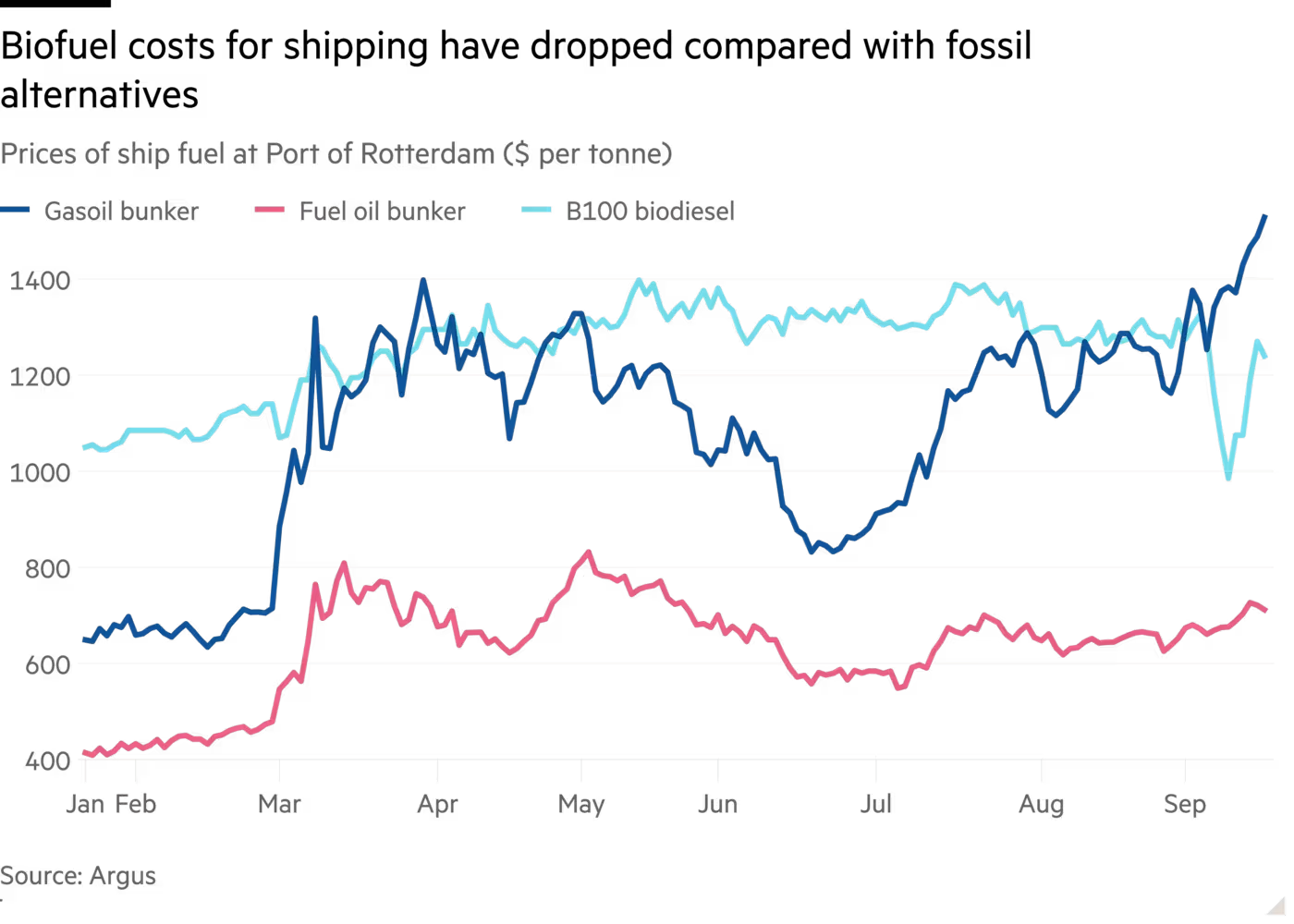
Marine biodiesel prices in Rotterdam have fallen to a record low. Once the cost of complying with European emissions regulations is included, biodiesel can already be more economical than most conventional marine fuels.

The price of marine biodiesel at the Port of Rotterdam recently fell to a record low of $985 per tonne, compared with as much as $1,388 per tonne in July. Following the sharp decline, the price partially recovered to approximately $1,240 per tonne.
By comparison, marine gasoil rose to $1,528.5 per tonne. Once the costs associated with complying with European greenhouse gas emissions requirements and purchasing carbon allowances are included, biodiesel becomes cheaper than almost all conventional marine fuels.
The figures were reported by the Financial Times, citing data from the price reporting agency Argus.
Why biodiesel prices are falling
One factor behind the price decline is suppliers’ efforts to increase biofuel sales and meet the EU’s emissions-reduction targets.
New Dutch rules implementing the revised EU Renewable Energy Directive, RED III, encourage marine fuel suppliers to reduce the carbon intensity of the fuels they place on the market. FuelEU Maritime requirements and the extension of the EU Emissions Trading System to maritime transport also affect the economics of different marine fuels.
At the same time, a significant share of the biodiesel sold in Rotterdam is produced from waste and residue feedstocks, including used cooking oil and palm oil processing residues. Its price has therefore been less exposed to the recent increase in fossil fuel costs.
Demand for marine biofuels is increasing
The shift in relative fuel prices is already affecting the market. Sales of marine biodiesel blends in Rotterdam more than doubled in the second quarter of 2026 compared with the previous three months.
Biodiesel can be used in most existing marine engines, either in pure form or blended with conventional fuel. Only minor technical modifications are usually required, making it one of the most readily available short-term options for reducing emissions from shipping.
However, biodiesel has approximately 7–10% lower energy density than conventional marine fuel. As a result, a vessel may need to consume a slightly larger volume of fuel to complete the same voyage.
Biofuels still account for a small market share
Despite the positive trend, biofuels currently account for only around 0.6% of global marine fuel consumption. Further growth will depend on fuel prices, the availability of sustainable feedstocks, the expansion of production capacity and consistent climate policies.
According to Argus estimates, demand for high-quality unblended biodiesel in Rotterdam could reach approximately 250,000 tonnes in 2026. This would represent more than 40% of the estimated global marine biofuel market of about 600,000 tonnes.
Shipping also competes with road transport and aviation for sustainable biofuel feedstocks. In addition, EU regulations limit the types of feedstock that qualify for emissions-reduction benefits.
A new price signal for shipping decarbonisation
The developments in Rotterdam demonstrate an important shift: renewable fuels can compete with fossil fuels not only in terms of emissions reduction but also on price.
EU regulatory mechanisms are gradually incorporating the cost of carbon emissions into the final cost of marine fuels. This makes lower-carbon alternatives increasingly attractive to shipowners and fuel suppliers.
For Ukraine, this trend provides another strong argument for developing the production of liquid biofuels from sustainable feedstocks, waste and residues. Ukraine has the necessary resource base and the potential to become part of the growing European market for renewable transport fuels.
Source: Financial Times — Biodiesel for shipping now cheaper than conventional fuels after price fall.