
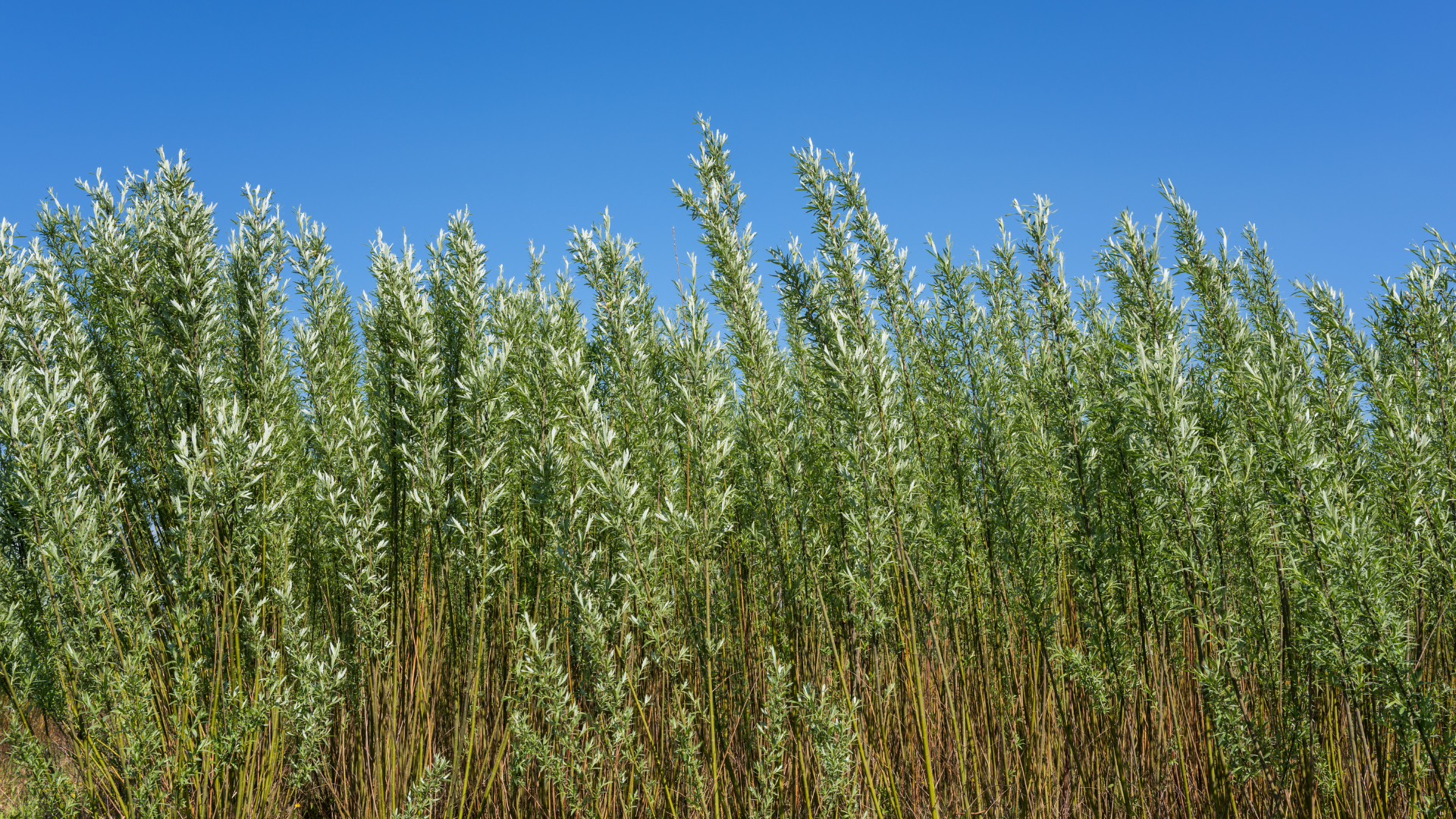
For 25 years, Europe tried to turn energy crops into a business and failed. But new EU rules are opening up four niches where Ukraine has a strong chance of success.
In a new article for Ekonomichna Pravda, UABIO Chairman of the Board Georgii Geletukha continues the theme of his previous column on the global price reversal, in which grain is getting cheaper while energy is getting more expensive. He explains why energy crop plantations in Europe never became widespread and what new opportunities European regulations are creating.
The author also examines what Ukraine needs to take advantage of them. A key role here is played by the newly signed law on the implementation of EU legislation in the field of renewable energy (Draft Law No. 14271) and its secondary legislation.
Read the full article on the Ekonomichna Pravda website (in Ukrainian)
Why did Europe stall?
In the EU, energy crops occupy 6–7 million hectares, or roughly 6–7% of arable land. However, more than 90% of this area is taken up by annual food crops: rapeseed for biodiesel, cereals and sugar beet for ethanol, and maize for biogas. Over 25 years, perennial energy crops (miscanthus, energy willow, poplar, silphium) have covered less than 0.1 million hectares. In Germany, the largest biogas market, the area under energy crops for biogas shrank from 1.55 million hectares in 2019 to 1.19 million hectares in 2025.
The reasons for this are not agronomic. The first is political: since 2018, the Renewable Energy Directive has capped fuels made from food crops. The second lies in field economics. A plantation costs EUR 2,000–4,000 per hectare, takes 5–8 years to pay back, and ties up the land for 20 years, yet there is usually no long-term buyer. So the key question is not how to grow the biomass, but how to sell a tonne of it profitably.
Four niches for Ukraine
Intermediate crops for biomethane
For Ukraine, this is the most natural niche. The government programme sets a target of 1 bcm of biomethane in 2030 and 2.1 bcm in 2035. UABIO estimates the potential of waste alone (manure, straw, stalks, processing by-products) at more than 7 bcm of biomethane per year. Another 0.5–1 million hectares of intermediate crops would yield an additional 0.75–3 bcm of biomethane per year. Three conditions are needed for this. First, the European definition of intermediate crops must be adopted in secondary legislation. Second, Ukraine must avoid silage maize, which was Germany’s mistake. Third, the EU market must be opened through sustainability certification and by connecting the Ukrainian registry to the Union Database.
Crops on degraded land
Here, Ukraine’s scale exceeds Europe’s. The EU has only 2.9 million hectares of severely degraded land under the Directive’s criteria, and 90% of it is already cultivated. In Ukraine, even before the war, 10–12 million hectares were considered degraded. The war has added more than 2 million hectares of former combat zones and around 0.5 million hectares that lost irrigation after the destruction of the Kakhovka hydropower plant. Realistically, 1–2.5 million hectares could be brought under energy crops, two to three times the European reserve. Biomass from such land qualifies as advanced feedstock for aviation fuel. This requires a registry of such land and permission to use perennial crops as a form of soil conservation.
Buffer strips
A strip of willow, poplar or miscanthus along a river reduces nitrate leaching by 5–10 times within two years and stops 90% of soil erosion. It also sequesters 0.3–1 tonne of carbon per hectare annually and yields 8–15 tonnes of biomass. Ukraine has about 440,000 hectares of field shelterbelts, with shelterbelt forest cover at 1.3% against the required 2.5–3.5%. Without using a single hectare of chernozem, 0.4–1 million hectares of “energy eco-strips” could be created. That means 1.5–4 bcm of substituted gas and 3–7.5 million tonnes of CO₂ emission reductions per year.
Materials and biochar
A tonne of miscanthus is worth EUR 40–90 as fuel, EUR 120–350 as feedstock for materials and chemicals, and EUR 250–450 as biochar with certified carbon removal units. The number of biochar plants in Europe grew from around twenty in 2015 to more than 200 in 2025. Pyrolysis of a tonne of miscanthus yields about 300 kg of biochar, 0.8 tonnes of permanently removed CO₂, and 5–7 GJ of heat. This is the only value chain in which a perennial crop pays for itself without agricultural subsidies. Ukraine still lacks the necessary regulations: biochar cannot be registered as a fertiliser, and there are no national standards (DSTU) for hempcrete or miscanthus blocks.
What should be done?
The barriers are common to all four niches, so the solutions must come as a package:
- Transpose as a package. Secondary legislation under the new law should jointly define intermediate crops, severely degraded land and lignocellulosic feedstock, and introduce a bonus for restoring degraded land.
- Amend the Land and Water Codes. Perennial energy plantations should be permitted as a form of conservation of degraded land, as well as in buffer and riparian strips, with leases of municipal land for up to 25 years.
- Create a registry of severely degraded land based on European criteria, prioritising the South and frontline regions.
- Introduce a standard for carbon farming and permanent removals with a registry compatible with the European certification framework, along with payments for protecting water intake areas; register biochar as a fertiliser; abolish the tax on biogenic CO₂.
- Open the EU market to Ukrainian biomethane. Feedstock should consist of manure, residues and cover crops rather than maize silage. International sustainability certification and connection of the registry to the Union Database are also needed.
- Launch 3–5 pilot clusters in 2027–2029, each covering 300–2,000 hectares (the saline South, the eroded Forest-Steppe, the industrially disturbed East, the Polissia peatlands, demined land), financed by the Ukraine Facility, NEFCO, the EIB and Horizon Europe.
- Give local communities a financial model. It should combine partial compensation of plantation establishment costs, payments for soil and water protection, and carbon credits. This combination makes perennial plantations pay back within 5–7 years.
Conclusions
Without a long-term buyer, a plantation on arable land loses out to wheat, and that is exactly why Europe stalled. But in 2023–2026, the EU opened niches where biomass is sold as carbon, as an ecosystem service and as a material. For these niches, Ukraine has 10–12 million hectares of degraded soils, 440,000 hectares of shelterbelts and ploughed-up riparian strips. What it lacks is not hectares but secondary legislation, registries, standards and a buyer. All of this can be resolved within two to three years, and this is precisely what separates a country that exports raw materials that are getting cheaper from a country that sells energy that is getting more expensive.
Read the full article on the Ekonomichna Pravda website (in Ukrainian)