Biomethane for Scaling Up Agricultural Processing in Ukraine: UABIO at the BLACK SEA GRAIN. KYIV-2026 Event
On April 22, the large-scale international agricultural event BLACK SEA GRAIN.KYIV-2026 took place, with a key focus on UA Agro Restart: Strategies for the Future 2026–2030. The event was dedicated to the strategic development of the agricultural sector through 2030: investments, energy independence, processing, and the export of high-tech products. UABIO is an official partner of the conference.
During the panel discussion titled “Food, Fuel, Future: How Will Ukraine Scale Up Processing?” speakers included Georgii Geletukha, Chairman of the Board of UABIO, and Serhii Kravchuk, CEO of Gals Agro. The panel was moderated by Yulia Garkavenko, Head of the Analytical Department at UkrAgroConsult.
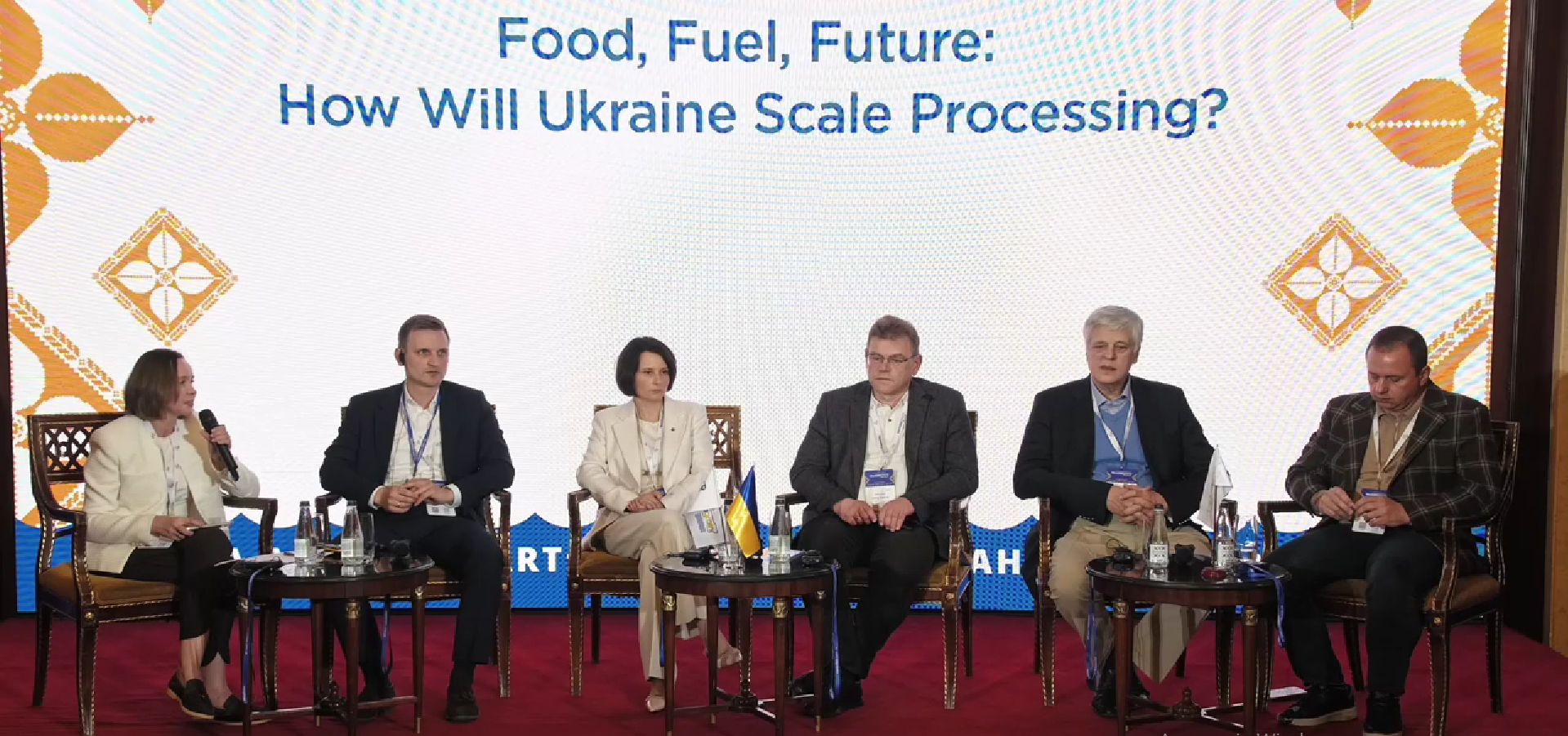
Other panelists include:
- Andriy Tsehelyk, CEO, biotech company Enzym Group.
- Valentyna Hrechka, Partner at investment firm INTELEVRAZ and investment fund Strong Energy.
- Frank Jobst, Procurement and Trade Manager, Rostock Power Oil Plant, Germany.
Highlights from Georgii Geletukha’s speech
“The most promising area in bioenergy right now is biomethane. There are several reasons for this. Biomethane is a complete substitute for natural gas. The EU has set a policy goal of decarbonizing by 2050. This means that by 2050, the pipelines that currently carry natural gas must carry renewable gas. There aren’t many options among renewable gases. The main one is biomethane”.
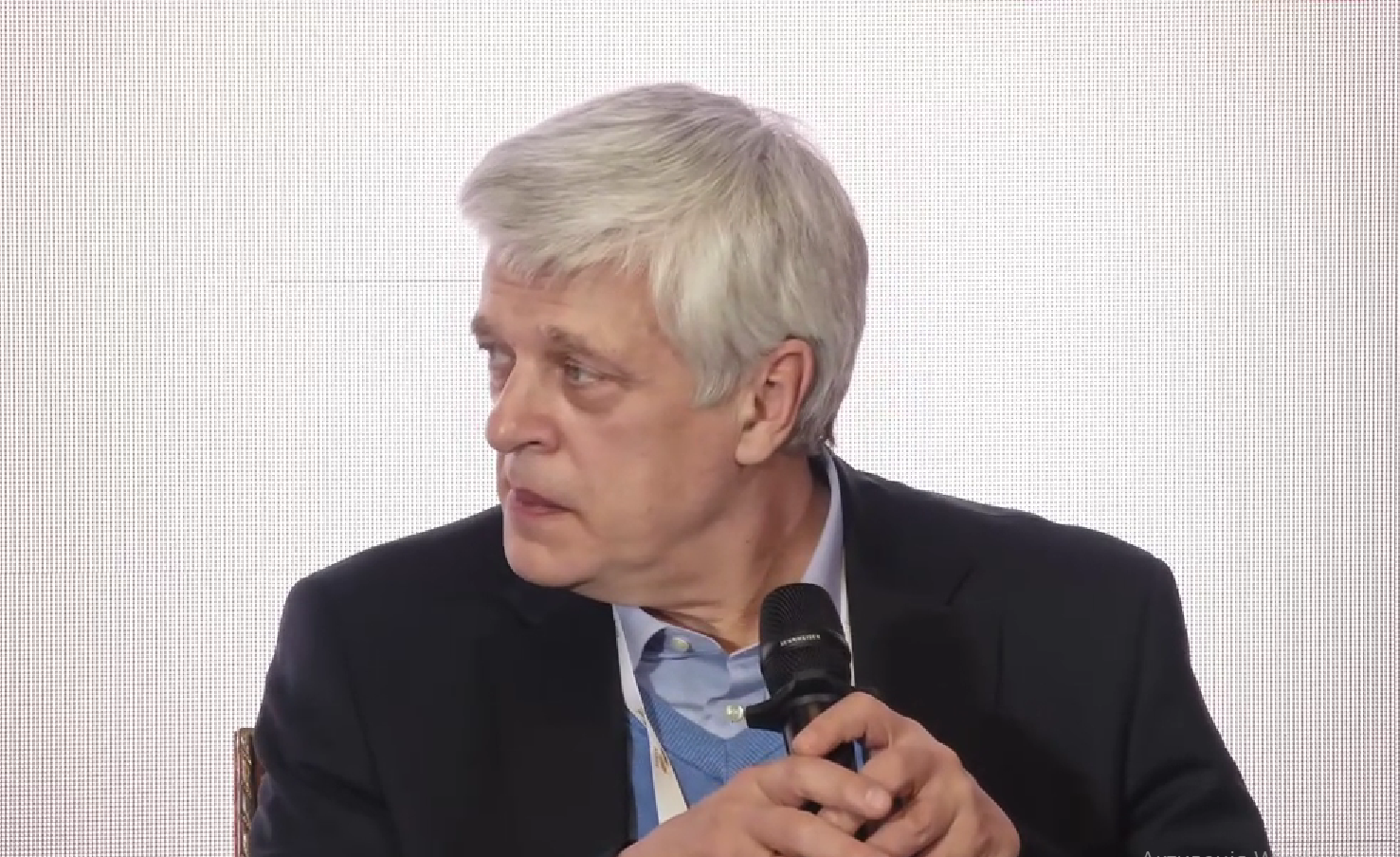
The Chairman of the Board noted that the tight biomethane market in the EU is clearly of interest to Ukraine — Europe’s largest agricultural nation: “Today, Europe produces only 5 billion cubic meters of biomethane per year, though it has set an ambitious goal of reaching 35 billion by 2030 and 150 billion cubic meters by 2050. Imagine if Ukraine already had, for example, 20 or 30 billion cubic meters of biomethane — the European market would gladly absorb that volume. In addition, our agricultural enterprises are quite large. In Europe, everything is much smaller. Accordingly, it is possible to gather a sufficient amount of raw materials from a single source and build a large biomethane plant. It will have more competitive advantages than the small biomethane plants that Europe is building”.
The expert also thanked government officials for their consistent support of the biomethane market in Ukraine. “The basic law on biomethane — in fact, the term ‘biomethane’ itself — first appeared in Ukrainian legislation at the end of 2021. And in February 2022, the full-scale invasion began. We didn’t have time to develop this niche. However, the Verkhovna Rada approves everything related to biomethane. It approves it by a large majority. Therefore, there are no negative comments about the government, only gratitude. In addition, a coordination council under the Ministry of Economy is constantly at work, specifically monitoring these issues of bioenergy development”.
Georgii Geletukha also shared the plans for the development of biomethane in Ukraine and his vision for the sector’s future.
“As an association, we expect that there will be thousands of such biomethane plants in Ukraine. We have space to grow, and the key factor here is the market. Right now, it’s a European market, but as Ukraine integrates into the EU, the domestic market will also open up. By the way, biomethane is already cost-effective for transportation. You can convert your car to run on compressed or liquefied biomethane, and it will be significantly cheaper than running on diesel”.
Highlights from Serhii Kravchuk’s speech
“The biomethane sector is a ‘blue ocean’ — a niche with great potential. Here, companies can confidently and steadily grow within their means, within the limits of their investment and credit capabilities”.
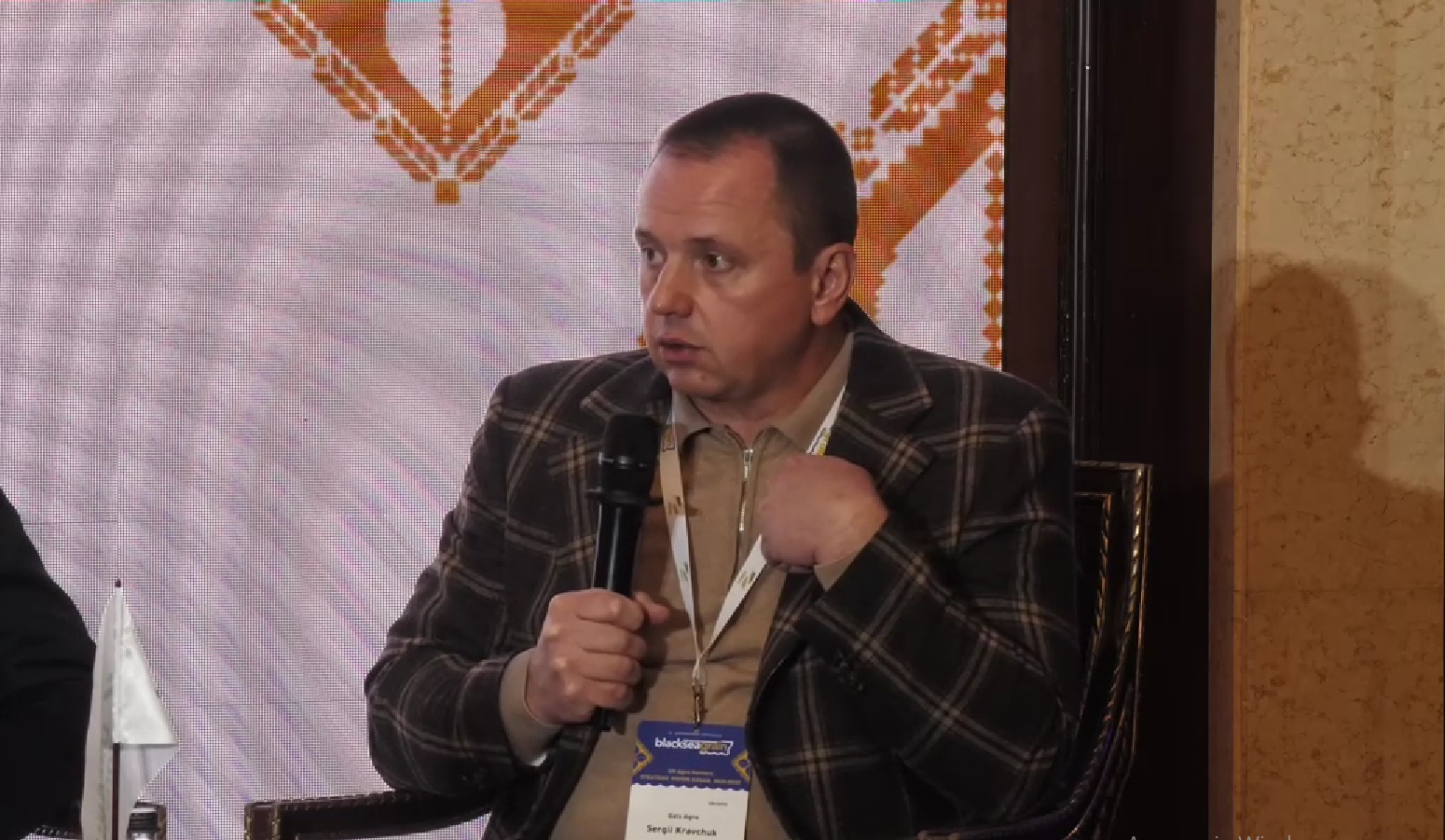
“Should farmers get into processing? Of course they should. But they need to be fully aware of the risks: building new facilities without first securing distribution channels leads to catastrophe. We’ve already seen this with sugar. A similar fate could befall rapeseed oil or bioethanol production if we start building factories on a massive scale without considering whether the EU is ready to protect its own producers or whether we have long-term contracts”.
Serhii Kravchuk noted that instead of chaotic investment, the business sector needs a systematic approach. Ukraine needs a sectoral development strategy aligned with key markets (the EU, Asia) to avoid overproduction. The CEO of Gals Agro notes that competition between the “Food and Fuel” sectors is a healthy process, as the experience of the United States shows; however, every step in processing must be based on guaranteed demand, not just the availability of raw materials.
We were pleased to participate in this landmark event as an official partner of the conference. We are grateful to the organizers and our colleagues for the professional discussion. We are confident that through the joint efforts of the business community and the government, the processing sector will become a driving force for the Ukrainian economy, and biomethane will be the key to our energy integration into the European Union. See you at future events!