European biogas production and updated forecast through 2050 — a Guidehouse report for the European Biogas Association
Europe’s transition to a climate-neutral energy system and geopolitical shocks have forced a search for alternatives to imported fossil fuels. In this context, biogas and biomethane remain underappreciated, despite their ability to provide renewable energy that can be stored and regulated on demand through existing gas infrastructure.
The April report, “Biogases: Europe’s overlooked path to energy independence?” reevaluates the potential for sustainable biogases (raw biogas and biomethane) production in Europe based on an analysis conducted by Guidehouse for the European Biogas Association (EBA).
Based on updated data and modern methodology, the report clearly demonstrates how biogases will help Europe achieve energy independence by 2030, 2040, and 2050. The study’s findings confirm that biogases are a scalable and strategic component of Europe’s long-term energy and climate strategy, capable of ensuring both the flexibility of the energy system and broader socioeconomic benefits.
EU plans at risk
Biogases will play an important role in the European Union’s (EU) ambition to be resilient, competitive and to achieve a net zero future by 2050. In 2022, the European Commission established a political target in the REPowerEU plan to produce 35 billion cubic metres (bcm) of biomethane annually by 2030 in the EU. This objective aims to enhance energy security and support net zero goals by providing a renewable, domestically-produced source of gas that can directly substitute fossil natural gas across multiple sectors of the economy.
Despite progress since 2022, current developments show that the EU is not on track to meet this target. Although the underlying potential in Europe is sufficient to meet the target, further action is required to mobilise resources and scale this strategic domestic industry through 2030 and beyond, enabling it to reach its full potential by 2050.
Biogas and biomethane production in Europe
In 2024, Europe produced 5 bcm of grid-quality biomethane and 17 bcm of biogas for combined heat and power. Predecessor studies conducted in 2022 and 2024, assessed the biomethane production potential in in Europe (EU-27, plus Norway, Switzerland and the United Kingdom). This updated study revisits the 2024 Guidehouse assessment, incorporating the latest data as well as current market and regulatory insights.
The total potential of biomethane and e-methane (synthetic methane produced using hydrogen) in 2030, assessed in this study, is 34-35 bcm/year (of which 31-32 bcm/year relates to the EU-27), and almost exclusively based on biomethane from anaerobic digestion (with a minor share of e-methane). Thermal gasification is no longer considered to be close enough to commercialisation to make a material contribution towards the potential in 2030.
However, both thermal gasification and e-methane are set to become relevant in the 2040 timeframe and beyond. A steep increase in the total potential is anticipated after 2030, with an assessed range of 116-132 bcm/year in 2040 and 181-205 bcm/year in 2050 (of which 105-119 bcm/year and 163-184 bcm/year relates to the EU-27 in 2040 and 2040 respectively).
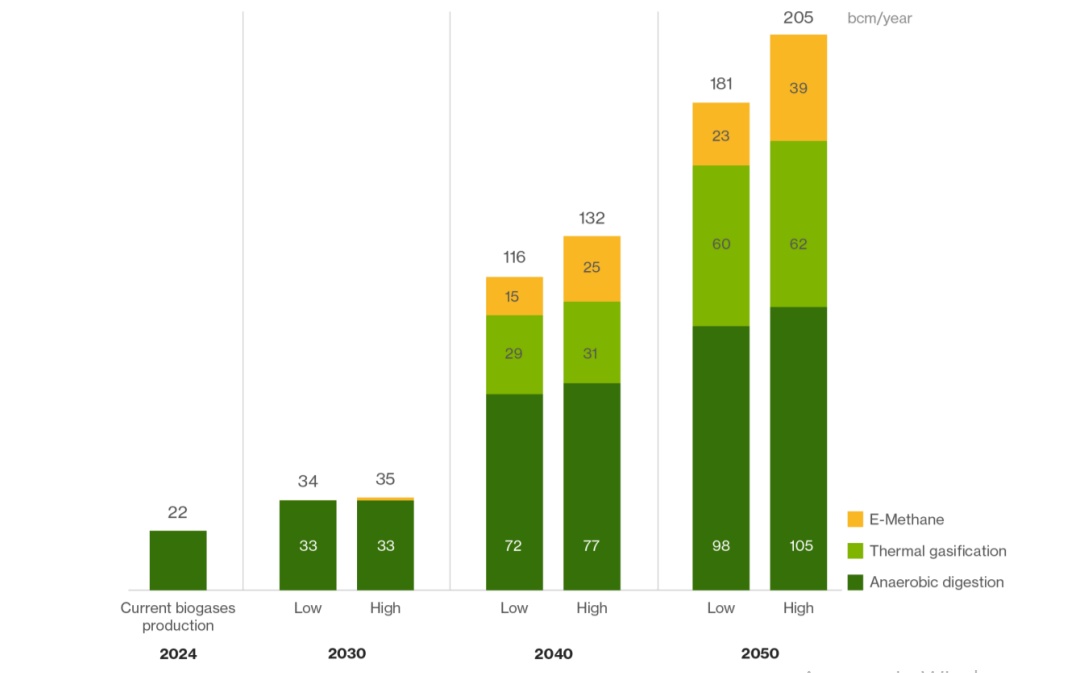
Anaerobic digestion is still expected to be the dominant technology, representing ~61% of the total in 2040 and ~53% of the total in 2050, as these complementary technologies further commercialise towards 2050 (with thermal gasification representing ~25% and ~32% of the totals in 2040 and 2050 respectively).
As noted in a 2024 study, additional potential can be tapped through new types of feedstock, such as marine algae, as well as digestate from hydrothermal gasification and pyrolysis. Landfill gas will further increase this potential in the short and medium term.
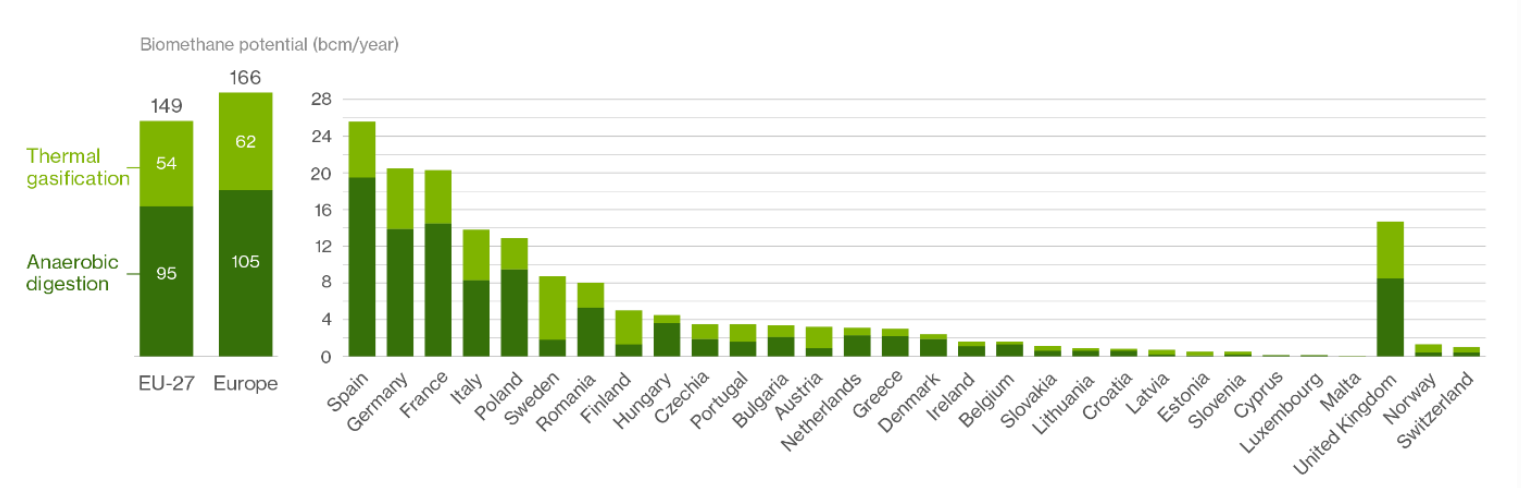
The raw material base consists of waste and residues that are already available in large quantities throughout Europe and are ideally suited for anaerobic digestion. In addition, the study quantifies the potential of raw materials from low-productivity and contaminated lands, as well as the potential of biogenic CO2. This bio-CO2 enables the efficient production of an additional renewable gas — e-methane.
Expanding Europe’s raw material base for biomethane
This report confirms the important role of biogases in Europe’s future decarbonized energy system. However, the 2030 potential estimate has been revised downward compared to previous studies due to a lack of timely action to deploy technologies and harness available feedstocks. To provide the sector with the necessary momentum, there needs to be a more consistent recognition at the policy level of the systemic benefits that biomethane can deliver.
Scaling up the industry requires better coordination and harmonization among different policy areas and European countries, the streamlining of permitting procedures, as well as clear targets and collaboration with the agricultural, forestry, and waste management sectors. In addition, as the capacity of biogas plants increases, it is necessary to create structures for consolidating feedstock flows at large plants or to collect biogas from small-scale facilities and transport it to centralized upgrading complexes.
The cultivation of intermediate crops requires clear definitions, including their integration into current policies, as well as national production targets. Long-term, predictable support for farmers will help stimulate this process. In addition, coordinated outreach and training efforts by project developers will help boost the cultivation of such crops around specific biogas plants.
The use of low-productivity and contaminated land will yield environmental benefits, stop soil erosion, and ensure soil remediation through phytoremediation. Since the restoration of degraded land requires significant initial investment, farmers need financial incentives under the Common Agricultural Policy (CAP) or the Renewable Energy Directive (RED), or through contractually guaranteed feedstock prices from biomethane producers. The government and municipalities must ensure clear classification and mapping of such sites, taking into account logistics and proximity to the gas transmission network, and large owners of former industrial sites must participate in the reclamation process.
Competition for raw materials: challenges and opportunities for biomethane
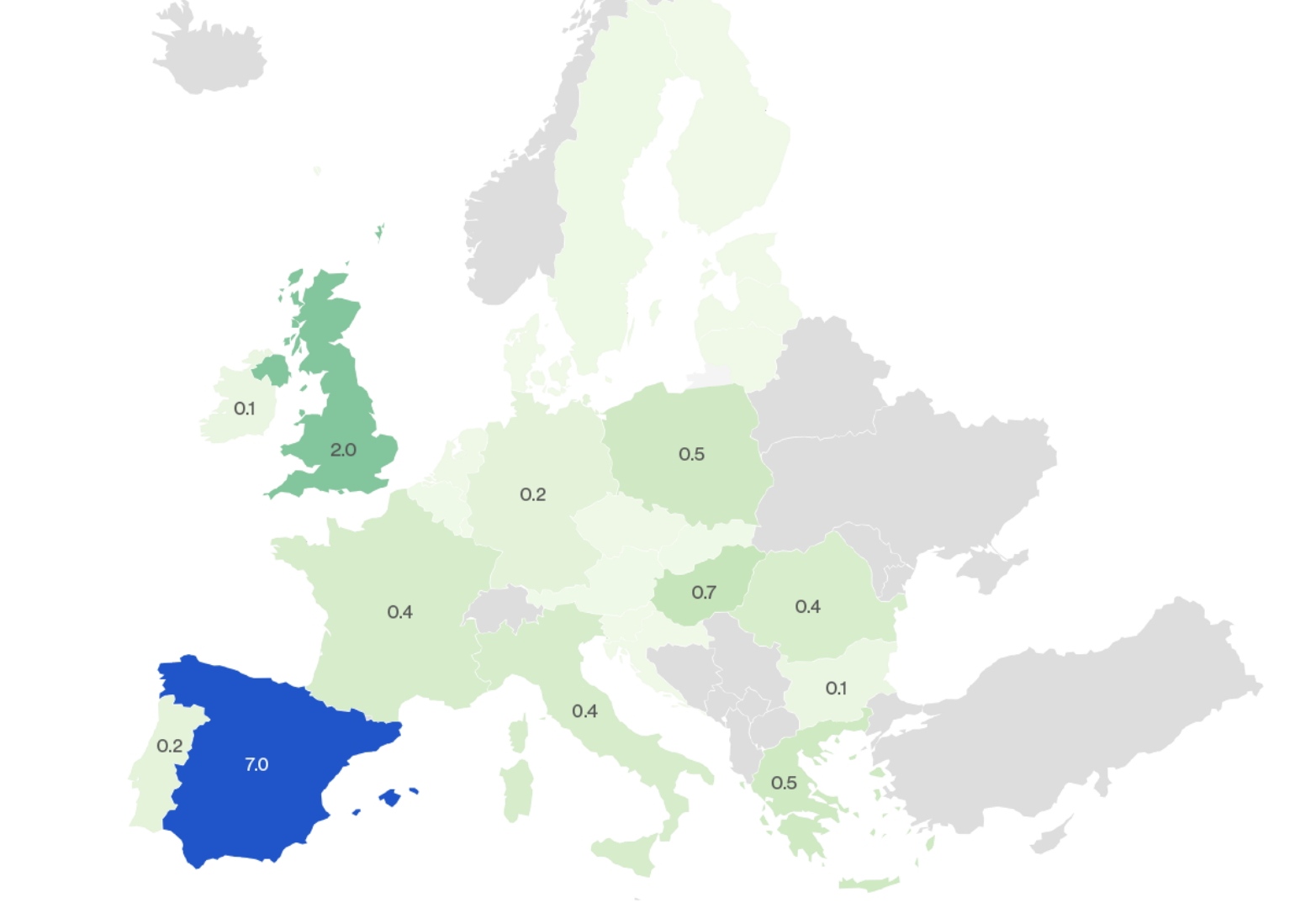
Feedstock competition across the bioeconomy will tighten towards 2050, however the expected impact is limited for many conventional biogas feedstocks.
The large-scale deployment of biomethane in Europe depends not only on the technical availability of sustainable biomass, but also on how feedstocks are allocated across competing uses in an increasingly integrated bioeconomy. Wet organic waste feedstocks, such as animal manure, biowaste, industrial wastewater and sewage sludge, are very well suited to treatment via anaerobic digestion, and are not expected to face significant competition into the future as there are limited alternative options to utilise them for energy generation or across the wider bioeconomy. Additionally, the use of these feedstocks for anaerobic digestion delivers multiple environmental benefits, such as fugitive greenhouse gas emission avoidance, opportunities for nutrient recycling through the application of digestate and local pollution reduction. In contrast, significant competition for woody biomass feedstocks that are well suited for thermal gasification is expected over time, from continuing demand for conventional heat and power generation, as well as emerging demand for sustainable aviation fuels production, permanent carbon removals (carbon capture and storage and biochar), as well as demand as a bio-based material in sectors such as construction or bio-based chemicals.
Download the full Guidehouse report for the EBA
The report “Biogases: Europe’s overlooked path to energy independence?” is not a forecast of events that are certain to occur. Rather, it demonstrates what is possible if coordinated action is taken across Europe to secure sustainable feedstock supplies for biomethane production. Realizing this potential will require coordinated efforts and stable legislation that provides certainty for participants throughout the biomethane value chain. Under the right conditions, Europe has significant sustainable potential for producing renewable energy from domestic sources, which will make a substantial contribution to its future energy independence.